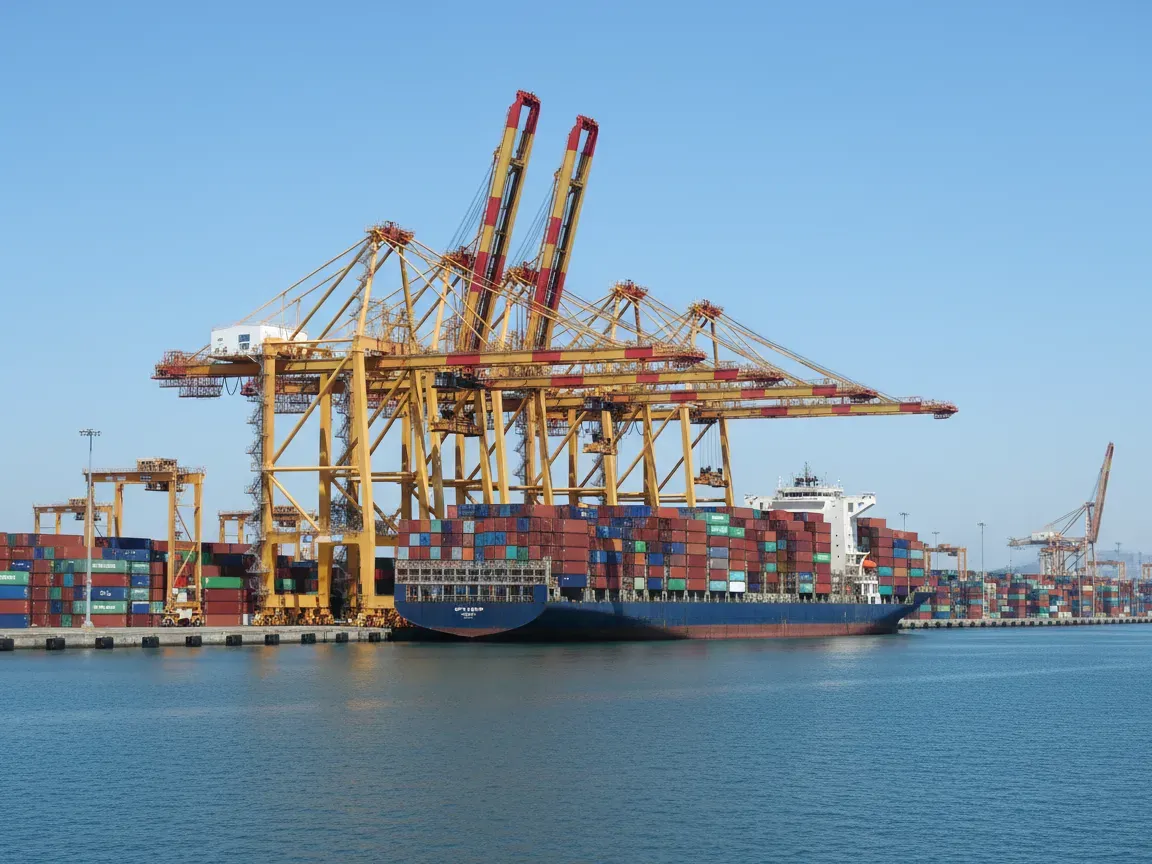

Persistent bottlenecks at the Panama Canal are fundamentally altering trade corridors between Asia and the United States. Faced with strict booking limits and fluctuating transit fees, supply chain leaders are abandoning historic maritime routes in favor of West Coast gateways. Chief among these alternatives is the Port of Los Angeles, which has regained its position as the premier entry point for import cargo destined for the American heartland.
Why Panama Canal Delays Are Reshaping Global Shipping Routes?
Historic drought conditions have severely depleted the freshwater reservoirs that supply the locks of the Panama Canal. Because each transit expels millions of gallons of water into the ocean, the Panama Canal Authority had to impose severe draft restrictions and cap daily vessel passages.
These operational constraints generated immense backlogs of container vessels and bulk carriers anchored offshore. Shippers that historically relied on guaranteed all-water routes to Gulf and East Coast ports now confront major scheduling volatility. Arrival windows that used to be predictable within hours now slip by weeks.
To bypass the queue, carriers face unpredictable slot auction fees that add hundreds of thousands of dollars to an individual voyage. Consequently, logistics managers must navigate unreliable inventory pipelines, missing retail delivery windows and tying up working capital in floating stock.
Rising Operational Costs and Fuel Burn on Extended Sea Lanes
When the bottleneck at the canal first intensified, carriers explored alternative maritime pathways, including sailing vessels around Cape Horn. While circumnavigating South America avoids canal queues entirely, the geographic penalty creates unsustainable operational expenses.
- Extended voyages require thousands of nautical miles of extra sailing, dramatically accelerating marine fuel consumption.
- Longer routes tie up vessel capacity for additional weeks, effectively shrinking global container fleet availability.
- Bunker fuel surcharges and voyage extension fees compound, driving up the baseline shipping cost per container.
- Prolonged sea transit amplifies weather-related risks and equipment wear, threatening cargo integrity.
These extended transit times destroy the core value proposition of all-water transit, forcing cargo owners to re-evaluate their entire routing strategy.
How the Port of Los Angeles Restored Its Supply Chain Advantage?
The Port of Los Angeles utilized the post-pandemic cargo lull to clear terminal congestion, optimize yard footprints, and accelerate equipment velocity. Today, terminals across San Pedro Bay operate with dependable fluidity, eliminating the multi-week anchorage delays that plagued the region in prior cycles.
Container dwell times at terminal docks have fallen back to stable baseline levels. Turnaround times for drayage trucks have improved, allowing drivers to move containers off dock efficiently without compounding gate friction.
Additionally, ongoing capital investments in automated processing and dockside infrastructure ensure that mega container ships can be worked in days rather than weeks. This operational consistency makes Southern California an attractive, lower-risk landing ground for high-priority shipments.
Rail and Truck Capacity Awaiting Inbound Southern California Freight
A port is only as reliable as its inland exit capacity, and Southern California offers the most mature intermodal network in North America. Class I railroads serving the Port of Los Angeles maintain dedicated on-dock rail facilities that move ocean containers directly onto double-stack trains.
This rail integration allows goods to bypass regional highway bottlenecks entirely, linking import freight to logistics hubs in Chicago, Memphis, and Dallas within days. Concurrently, regional trucking fleets and regional warehouses provide immediate flexibility for expedited freight that requires domestic transloading or specialized regional distribution.
Because inland infrastructure is functioning without major bottlenecks, freight discharged in Los Angeles can reach the East Coast faster than a container ship sailing through alternate water corridors.
Balancing Total Landed Costs Between All-Water and Intermodal Transit
Determining whether to divert cargo from the Panama Canal to the West Coast requires analyzing true landed costs rather than ocean freight rates alone. While ocean legs straight to East Coast ports sometimes appear cheaper on a base rate sheet, indirect expenses rapidly erode that margin.
Logistics teams must account for unpredictable canal auction premiums, carrier delay surcharges, and inventory carrying costs incurred while stock sits idle on the water. When goods take forty days to reach a distribution center instead of twenty-one days via an intermodal route through Los Angeles, financing and storage costs mount.
By factoring in lower risk, tighter stock predictability, and quicker order turnaround, intermodal corridors regularly deliver a stronger net return on investment.
How Shippers Can Build Resilient Ocean Freight Playbooks Today?
Supply chain organizations cannot afford static logistics plans in an era characterized by climatic and geopolitical volatility. Building resilience requires diversifying port access points and establishing agile freight routing playbooks.
- Establish flexible ocean contracts that permit split volumes between West Coast intermodal and East Coast direct options.
- Use domestic transloading hubs in the Inland Empire to convert ocean boxes into domestic trailers, cutting inland transport expenses.
- Monitor waterway reservoir levels and canal restriction updates alongside ocean carrier operational advisories.
- Audit end-to-end transit times continuously to detect rising variability before inventory flow stalls.
Shippers that build dual-corridor logistics strategies protect their supply networks from unexpected disruptions and regional capacity crunches.
What Shifting Maritime Corridors Mean for Long-Term Logistics Strategy?
Water resource challenges in Central America represent a structural constraint on global trade rather than a brief seasonal issue. Changing weather patterns mean that draft caps and vessel transit limits will remain a recurring operational factor for the foreseeable future. Supply chain operators who treat these delays as temporary anomalies risk repeated inventory disruptions and escalating logistics spend.
Rerouting cargo through the Port of Los Angeles transforms a brittle supply chain into an adaptable distribution network. By leveraging modernized terminals and robust intermodal rail networks, enterprises regain control over critical transit schedules and inventory velocity. Successful logistics planning will increasingly favor flexible land bridges over rigid maritime lanes to safeguard customer commitments across North America.