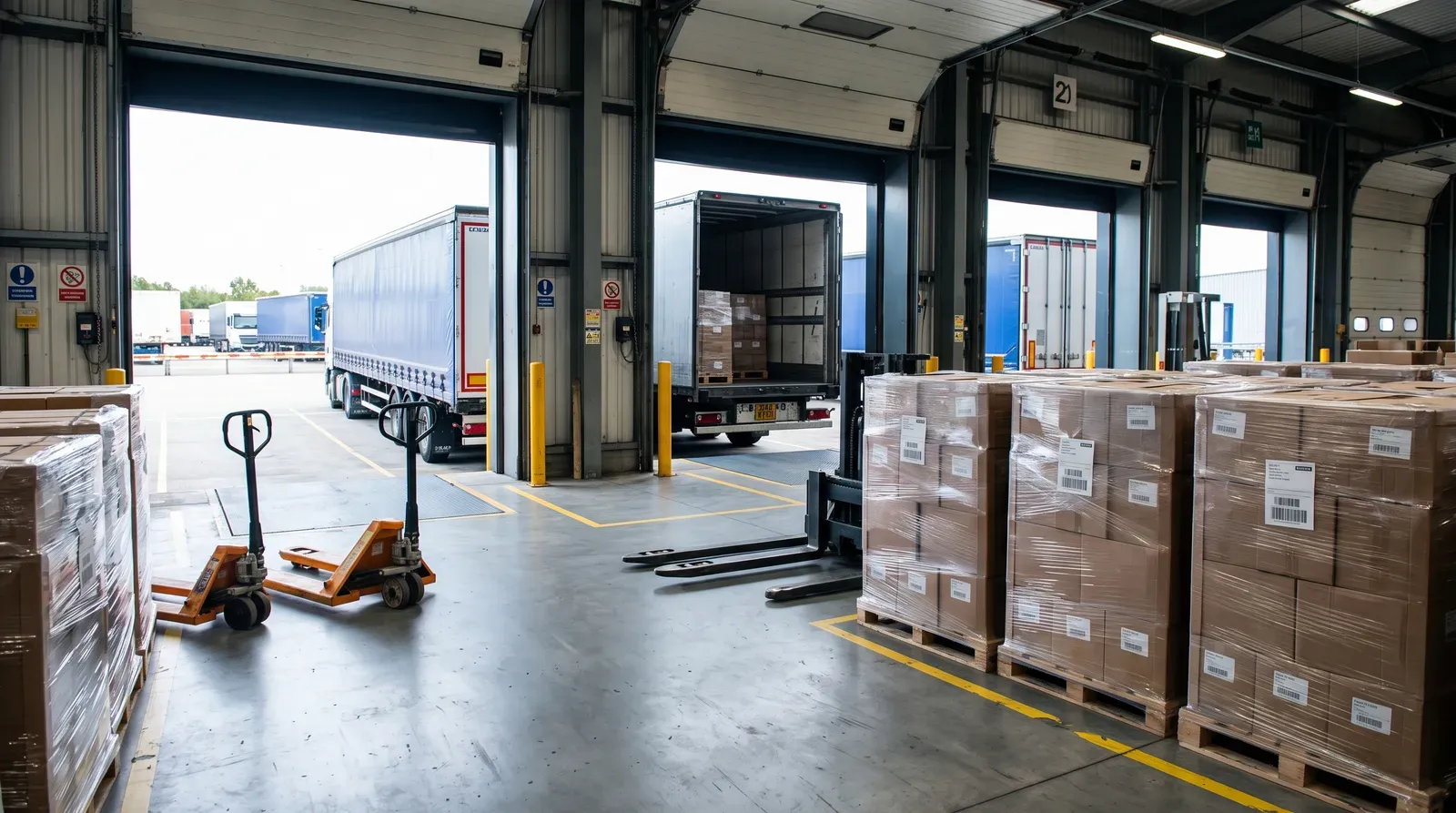

Navigating domestic freight distribution across the United Kingdom requires a clear understanding of your cargo profile, delivery timelines, and budget constraints. For business-to-business operations, moving goods reliably between production facilities, warehouses, and corporate clients is the backbone of daily revenue. Two dominant distribution models define domestic logistics across the region: shared pallet distribution networks and dedicated road transport. Each model addresses distinct commercial priorities, meaning the optimal choice depends heavily on your shipment volume, cargo handling sensitivity, and operational flexibility.
Selecting between these models is rarely about finding a single universal solution. Instead, savvy supply chain managers evaluate how each channel serves specific product lines and customer service agreements. While one shipment benefits from the consolidated economy of scale offered by shared trucking networks, another demands exclusive vehicle space to prevent costly handling disruptions.
Understanding how pallet distribution networks operate
Pallet networks run on a collaborative hub-and-spoke infrastructure designed to maximize vehicle capacity and lower regional hauling expenses. When you book a shipment through this model, a local depot collects your standardized pallet along with cargo from multiple other businesses. That evening, trunk vehicles transport grouped loads into a centralized distribution hub located strategically within the UK transport corridor. At the central facility, automated sorting equipment and forklift operators organize pallets according to their regional destination, reloading them onto outbound trucks bound for delivery depots across the country.
This consolidated framework turns partial truckloads into fully utilized linehauls, granting small to mid-sized businesses access to national distribution without the burden of hiring an entire vehicle. For enterprises seeking cost-effective regional reach, professional pallet delivery provides structured tariffs categorized by quarter, half, or full pallet dimensions. By standardizing package dimensions and weight thresholds, networks maintain predictable daily departures, making this setup ideal for regular commercial consignments that fit cleanly within standard pallet footprints.
Key advantages of using dedicated freight vehicles
Dedicated transport bypasses intermediate cross-docking completely by assigning an exclusive vehicle directly to your shipment. Once cargo is loaded at your facility, the driver proceeds straight to the receiver without stopping to pick up or offload secondary freight. This point-to-point service is especially vital for fragile, high-value, or non-standard equipment that cannot withstand the multiple handling stages common to shared distribution terminals.
Beyond cargo safety, dedicated freight delivers absolute control over dispatch scheduling and route management. If your operations run on synchronized manufacturing lines or require deliveries outside standard corporate receiving windows, hiring dedicated equipment guarantees exact arrival slots. Shippers also benefit from personalized handling protocols, tail-lift provisions, and direct communication with dispatchers, ensuring that sensitive consignments move under strict supervisory oversight from start to finish.
Cost comparison between shared networks and direct transit
Comparing expenses between these two transport formats requires looking past baseline freight quotes to analyze total cost of ownership. Pallet networks derive their financial appeal from shared fuel, toll, and labor costs. You pay strictly for the pallet spaces your cargo occupies inside the trailer rather than the full capacity of the vehicle. For consignments consisting of one to six standardized pallets, shared networks represent an economical choice, especially when delivery timelines allow standard forty-eight-hour routing.
In contrast, dedicated transit charges on a per-trip or per-mile basis regardless of whether the vehicle is half empty or loaded to maximum gross weight. While this represents a higher upfront expenditure for minor consignments, the financial math shifts dramatically as shipment volume grows. Once a single consignment exceeds eight to ten full pallets, hiring a dedicated curtain-sided vehicle or rigid truck often approaches price parity with multiple network spaces. Dedicated transport also reduces auxiliary expenses linked to secondary crating, protective packaging, and potential insurance claims stemming from transit damage.
Transit times and security considerations for business shipments
Speed and physical security represent the two primary operational trade-offs between shared hubs and direct hauling. Shared pallet networks operate within tightly synchronized schedules, typically offering economy forty-eight-hour or premium next-day distribution. However, because cargo passes through at least two handling facilities and undergoes cross-docking by mechanical forklifts, the exposure to rough handling, accidental drops, or misrouting inevitably increases. Packaging must be exceptionally durable, properly stretch-wrapped, and fully stable to withstand these intermediate transfer stages.
Direct transport dramatically shortens door-to-door transit time because the vehicle travels unhindered along the most efficient highway routes. This eliminates cross-docking risks entirely. The cargo remains secured on the original vehicle bed until delivery, minimizing the threat of mechanical damage, theft, or misplacement. For businesses shipping high-tier electronics, regulated materials, or mission-critical spare parts, the heightened security profile of dedicated transit easily justifies the operational investment.
How to evaluate your freight needs for UK domestic shipping?
Determining the right distribution channel requires a thorough audit of your internal inventory profiles and buyer agreements. Begin by cataloging your physical freight parameters: determine whether your goods conform to standard UK industrial pallet measurements or feature irregular overhangs that attract network penalty surcharges. Fragile liquids, delicate glass components, or top-heavy machinery frequently face restrictions in automated network terminals, making point-to-point transport the safer route.
Next, assess receiver reception constraints at the point of delivery. Commercial buyers operating with dedicated loading docks and flexible intake hours integrate effortlessly into standard network runs. Conversely, inner-city destinations, busy construction sites, or corporate retail facilities with tight arrival windows often demand dedicated couriers with specific unloading equipment. Factoring recipient site logistics into your early planning prevents costly missed deliveries and redelivery surcharges.
Strategic selection criteria for your logistics workflow
Developing an agile logistics workflow involves establishing clear decision rules for warehouse dispatch teams. Many modern enterprises successfully combine both methodologies into a balanced hybrid shipping strategy. Standard inventory replenishment runs heading to regional wholesale distributors flow through cost-effective pallet hubs, preserving working capital for high-volume trade. Meanwhile, expedited service parts, urgent stock transfers, and fragile commercial products move under dedicated contracts.
To standardize this process across your logistics team, consider developing clear operational criteria:
- Shipment scale and volume metrics to determine the tipping point where full vehicle chartering becomes cheaper than individual pallet spots.
- Lead time sensitivity, contrasting rigid contractual fulfillment penalties against flexible replenishment schedules.
- Packaging integrity, evaluating whether standard stretch wrapping suffices or if unboxed freight demands direct door-to-door transport.
- Customer service requirements, accommodating specific site access rules, timed delivery windows, or driver-assisted offloading.
Aligning distribution methods with commercial growth
Optimizing your supply chain infrastructure relies on recognizing that freight strategy directly influences customer satisfaction and operational margins. Viewing transportation simply as a cost center overlooks the commercial leverage provided by dependable delivery performance. By aligning pallet network efficiency with the pinpoint precision of dedicated road haulage, your business creates a resilient transport framework capable of adapting to shifting market demands.
Taking time to reassess routing protocols on a quarterly basis keeps freight expenditure aligned with actual volume trends across the UK market. When your shipping practices reflect the unique value profile and sensitivity of each consignment, you minimize transit disruptions while maintaining lean distribution budgets. Ultimately, balancing direct transit reliability with shared network scalability provides the practical foundation needed to support continuous business expansion.