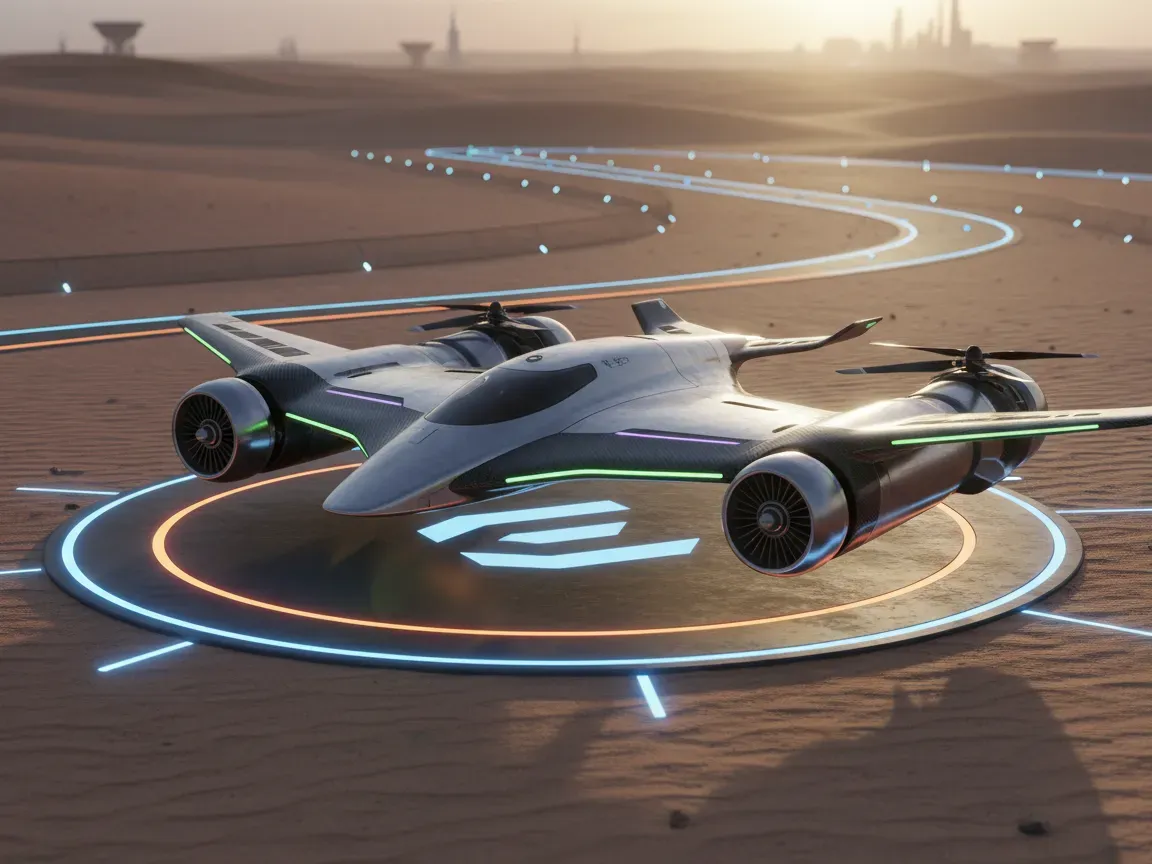

DeLorean has officially entered the Airspeeder electric flying car racing series, turning decades of science-fiction imagery into a functioning motorsport program. By backing an aerial racing team, the reborn automaker is connecting its retro-futuristic heritage directly to electric vertical takeoff and landing (eVTOL) technology. The move takes the brand far beyond standard ground-based electric vehicles and places it at the center of competitive sky racing.
From Pop Culture Icon to Real-World Aviation
For generations, the DeLorean nameplate remained synonymous with the cinematic promise of hovering personal transport. That connection gave the brand an immediate advantage when evaluating modern clean-tech mobility. Rather than simply launching another luxury battery-electric sedan, DeLorean is leveraging its futuristic brand equity to capture mainstream attention for aerial motorsport.
The leap from iconic movie prop to active aviation participant addresses a fundamental challenge for the emerging eVTOL sector: public familiarity. While urban air mobility concepts often struggle to capture popular enthusiasm, DeLorean brings built-in recognition. By aligning with a competitive league, the brand is reframing advanced electric aviation as thrilling entertainment rather than an abstract transportation experiment.
How the Airspeeder Electric Racing Series Operates?
Airspeeder serves as the premier proving ground for electric flying craft, operating much like Formula 1 does for automotive engineering. The league hosts remotely piloted contests along electronically designated sky tracks, challenging teams to manage high speeds, energy reserves, and aerial overtaking maneuvers.
The operational foundation relies on specific racing parameters designed to build competitive drama while minimizing risk:
- Digital sky tracks mapped through augmented reality, allowing pilots to navigate precise virtual corridors above remote terrain.
- Remotely piloted cockpit operation, enabling intense dogfight-style racing without putting human lives directly in the line of physical impact.
- Rapid battery-swap pit stops, where crews exchange depleted power packs in seconds to keep the aerial action continuous.
These operational constraints force teams to refine balance, thermal management, and rapid charging setups under real competitive stress.
Inside the High-Performance Tech of Mk3C Racers
At the technical core of this competition sits the Alauda Aeronautics Mk3C, a purpose-built multicopter designed specifically for high-speed maneuverability. The craft features an octocopter configuration arranged in an aerodynamic carbon-fiber frame, producing the thrust necessary for sudden vertical and horizontal acceleration.
Safety engineering forms the backbone of these vehicles. Operating multiple high-output electric motors in close proximity requires sophisticated obstacle-avoidance software, real-time telemetry, and LiDAR-assisted spatial awareness. If an individual rotor loses power or encounters aerodynamic turbulence, the flight controller instantly recalibrates the remaining motors to keep the craft stable. This hardware-software integration allows pilots to slice through tight aerial apexes at speeds exceeding 60 miles per hour while avoiding mid-air collisions.
DeLorean’s Roadmap Toward Custom Flying Vehicles
Competing with standardized Airspeeder hardware represents only the initial phase of DeLorean’s involvement. The company plans to use its track data to inform the development of proprietary aerodynamic components and custom-designed electric flying vehicles.
By operating within the competitive series, DeLorean engineers gain immediate access to performance metrics covering rotor efficiency, battery degradation under peak loads, and advanced lightweight materials. Over time, these insights will transition from race-specific multicopters to exclusive, bespoke flying concepts intended for private ownership and specialized transport. The racing circuit acts as a live laboratory, accelerating design cycles that would normally take years in isolated research facilities.
What Does Sky Racing Mean for the Future of Motorsports?
Motorsport has historically served as the primary marketing and development pipeline for everyday road vehicles, and the sky racing format is adopting that exact template for air transit. As crowds watch electric flying cars maneuver through technical courses, the cultural perception of eVTOL craft shifts from speculative fantasy to demonstrable engineering.
The racing format directly addresses public skepticism regarding flight stability, acoustic impact, and system reliability. By demonstrating that high-voltage electric craft can navigate turbulent race courses cleanly and safely, the series builds consumer trust. The entertainment value drives investment into safer flight algorithms and denser battery packs, creating commercial spillovers that will eventually benefit commercial air taxis and regional electric flight corridors.
The Long-Term Trajectory of Electric Flight
The partnership between DeLorean and Airspeeder demonstrates that the path toward personal flight runs directly through competitive sport. History shows that commercial aviation and conventional automotive manufacturing both matured because early pioneers raced their machines against each other to expose design flaws. Airspeeder provides that same unforgiving testing environment for battery chemistries, rapid-charging infrastructure, and fly-by-wire avionics.
For everyday drivers and tech observers, this collaboration signals that advanced air mobility is rapidly leaving behind computer renders and prototype tests. The familiar gullwing heritage may draw initial eyes to the screen, but the true impact lies in the aerodynamic and electrical data generated lap after lap. As racing pushes multicopter engineering closer to consumer safety standards, the sight of electric craft traversing designated corridors will evolve from a racing spectacle into the standard fabric of modern transit.