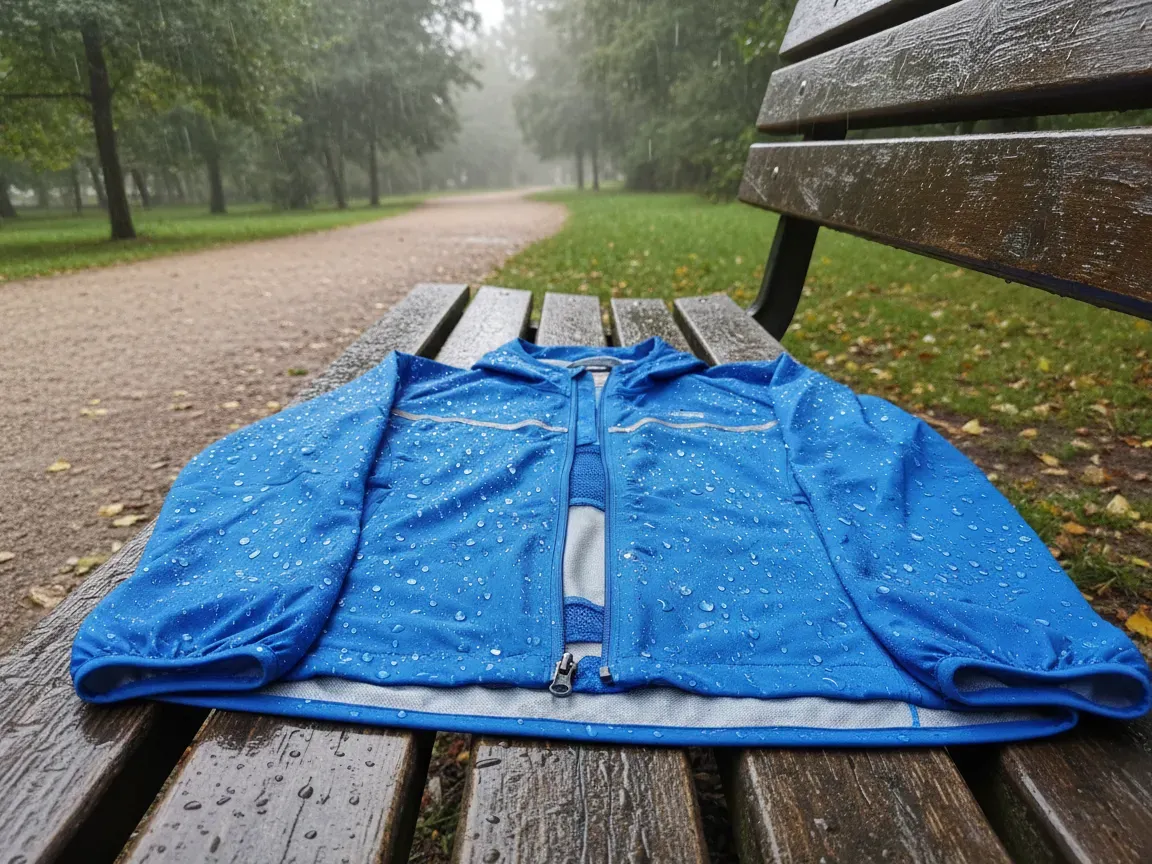

Stepping out into a steady downpour without the right gear turns a standard training session into a soggy, miserable chore. The wrong outerwear traps sweat instantly, leaving you just as wet from the inside as you would be from the falling rain. Finding the balance between water resistance and thermal regulation is the key to maintaining your pace when the weather turns.
What Makes a Running Rain Jacket Truly Perform?
A standard raincoat shields you from precipitation, but running demands far more dynamic performance. Your body generates massive amounts of heat during a tempo run or long interval workout, requiring fabric that lets moisture vapor escape while blocking droplets from driving in.
True running performance comes from garments engineered specifically for high-output movement. Designers must tailor the shoulder seams, sleeves, and torso cut to eliminate friction against your running shirt. If a jacket restricts your arm swing or billows like a parachute in the wind, it wastes energy and compromises your running form.
Key Features: Waterproof Ratings, Taped Seams, and Airflow
When shopping for technical running shells, marketing jargon can obscure what really matters. Paying attention to a few measurable specifications ensures you pick a piece built for the conditions you actually face:
- Waterproof ratings: Measured in millimeters, a rating between 10,000 mm and 20,000 mm keeps out sustained rain during extended outings on the road or trail.
- Taped seams: Even the finest waterproof fabric leaks if water seeps through stitching holes. Look for fully taped seams for torrential conditions, or critically taped seams for lighter drizzle.
- Durable water-repellent (DWR) finish: This chemical coating causes water to bead up and roll off the exterior face fabric, preventing the garment from soaking through and chilling your skin.
- Targeted ventilation: Laser-cut perforations under the arms, back cape vents, and two-way zippers help circulate fresh air without letting precipitation penetrate your core.
The 5 Best Rain Jackets to Keep You Moving in Any Storm
The market offers distinct designs tailored to varying climates, running styles, and weather severity. Here are five standout options built to keep you logging miles through wet conditions:
- Patagonia Stormstride Jacket: Built for harsher, cold-weather downpours, this shell uses an active-stretch three-layer membrane that moves naturally while sealing out high-volume rain.
- Brooks Canopy Jacket: A lighter option perfect for unpredictable shoulder seasons, offering reliable wind and light rain resistance with a soft, quiet feel against technical tees.
- Salomon Bonatti Waterproof: Designed with mountain trails in mind, it provides a tailored athletic cut and dependable 10k/10k weather protection that packs down into its own pocket.
- Arc’teryx Norvan Shell: An ultralight Gore-Tex option built specifically for trail runners who need extreme waterproof durability and minimal weight in remote environments.
- Janji Rainrunner Pack Jacket: Featuring 360-degree core venting and fully taped seams, this piece balances storm protection with airflow to prevent the sauna effect on humid mornings.
Packable Shells Versus Heavy-Duty Storm Shields
Deciding on a jacket requires honest assessment of your local climate and typical workout duration. Ultra-packable shells prioritize minimal weight and easy storage. They fit easily into a hydration vest or waist belt, making them ideal for variable spring days or sudden mountain squalls where you need temporary protection.
Heavy-duty storm shields, on the other hand, utilize multi-layer laminate fabrics designed for hours of relentless, freezing rain. While they weigh a few ounces more and take up additional room in a pack, they provide structural defense that lighter shells cannot match. If your winter training routinely involves near-freezing rain for ninety minutes or more, the protection of a heavier membrane is non-negotiable.
How Should You Wash and Maintain Waterproof Running Fabrics?
Technical waterproof fabrics degrade quickly if covered in body oils, salt, and mud. Dirt clogs the microscopic pores of the breathable membrane and breaks down the surface DWR treatment, leading to early fabric wetting.
To maintain performance, machine wash your running shell on a gentle cycle using a technical liquid cleaner rather than harsh household detergents. Never use fabric softeners or bleach, as they destroy functional coatings. After washing, tumble dry on low heat for twenty minutes to reactivate the water-repellent finish. If water stops beading on the surface even after drying, reapply a spray-on waterproofing treatment to restore factory-level performance.
Ready to Build Your Complete Rainy-Day Running Kit?
A high-grade shell serves as the anchor of your wet-weather setup, but complete comfort requires attention to the rest of your apparel. Pairing a premier jacket with soaked cotton socks or moisture-trapping shorts still results in friction and blisters.
Add a technical brimmed hat to keep driving rain out of your eyes and preserve your field of vision on dark roads. Switch to synthetic or merino wool running socks that retain insulating properties when damp, and choose running shoes with reliable wet-traction rubber outsoles. When every piece works together, wet weather stops being an excuse to move your workout to the treadmill.
Choosing the Right Balance Between Protection and Pace
Investing in technical rainwear comes down to how hot you run and how long you stay outside. A bombproof storm shield keeps out an ocean of water, but if your training focuses on high-speed intervals, internal humidity will quickly soak your base layer. Runners who prioritize tempo work often benefit more from highly ventilated, breathable shells than from fortress-like fabrics.
Take a close look at your weekly training log and typical route conditions before deciding. When you match the garment’s ventilation and membrane strength to your actual climate, staying on pace through gray skies and pouring rain becomes just another routine day on the road.